Geodetic basis
for construction and
as-built documents

Coordinates, levels and deviations
for designers, site teams and contractors

Topographic plans, stakeout, as-built survey and DWG/PDF/CSV/BIM delivery

What you get

Topographicplan

Coordinatebasis

As-builtsurvey

Data formatsDWG, PDF,CSV, Revit

Tasks

When geodesy is needed

  • No current geospatial base

    Existing plans are outdated, incomplete or unsuitable for design work.

  • Relief and utilities must be captured

    Levels, boundaries, site elements and engineering networks must be recorded.

  • Construction control is required

    Before installation, concreting or handover, the actual position must be verified.

  • A single coordinate system is needed

    Data must align with BIM, point clouds, drawings and contractors.

  • Survey data and scans must align

    Complex objects need geodetic control for laser scanning and photogrammetry.

Result

Geodetic documentation package

  • Topographic plan

    • Scale selected for the project task
    • Relief and elevation marks
    • Utilities and site improvement elements
    • Buildings, surfaces, fences and site situation
    • Delivery in DWG and PDF
  • Coordinate basis

    • GNSS measurements
    • Total station survey
    • Benchmarks and control points
    • Local or state coordinate system
    • Coordinate schedule and report
  • Construction support

    • Axis and point stakeout
    • Position control for structures
    • Level and elevation control
    • As-built survey
    • Deviation capture against the design
  • Project team kit

    • CAD base for architects and engineers
    • Data for Revit, Archicad, IFC and SketchUp
    • Point cloud alignment when needed
    • Photo capture of key zones
    • Structured materials archive
Risks

Construction risks geodesy reduces

A geodetic basis helps verify site reality before an error turns into rework, a contractor dispute or a schedule break.

  • Stakeout errors

    Axes, levels and control points are fixed in a clear coordinate system for contractors and technical supervision.

  • Rework after installation

    Position control lowers the risk of discovering deviations after concreting, installation or finishing.

  • Disputes between teams

    As-built surveys and schedules create a verifiable basis for discussing facts, not opinions.

  • Schedule breaks

    Timely checks of levels, boundaries and actual position help keep the next construction stage moving.

Work types

Task → work → deliverable → timeline

The scope is selected for the object: from point stakeout to a topographic survey and laser scanning alignment.

  • Topographic survey of a site

    What we do
    Capture relief, surfaces, buildings, landscaping elements, utilities and work boundaries.
    What you get
    DWG/PDF topographic plan, point schedule and materials archive.
    Typical timing
    from 1 business day
  • Coordinate basis

    What we do
    Create or refine control points, benchmarks, coordinate and elevation systems.
    What you get
    Coordinate schedule, control point diagram and alignment parameters.
    Typical timing
    1-2 business days
  • Stakeout of axes, points and levels

    What we do
    Set out design elements on site and verify position in the required system.
    What you get
    Stakeout data, levels, photo capture and deviation comments.
    Typical timing
    on the visit day
  • As-built survey of a stage

    What we do
    Measure actual position of structures, networks, bases or installed elements.
    What you get
    DWG/PDF, schedules, deviations against design and materials for site engineers.
    Typical timing
    1-3 business days
  • UAV and large territory

    What we do
    Collect aerial imagery, control points, orthophoto and surface model.
    What you get
    Orthophoto, DSM/DTM by task, alignment and design-ready materials.
    Typical timing
    2-5 business days
  • Scan and BIM alignment

    What we do
    Connect geodetic control with point clouds, models and CAD/BIM coordinates.
    What you get
    One coordinate system for scans, model, drawings and the project team.
    Typical timing
    depends on 3D scope
Cost and timing

Budget anchors before detailed estimation

For the first budget orientation we use common Russia market ranges. After the address, boundaries, access and required output are known, we clarify the scope and estimate.

  • Scope calculation

    within 1 business day

    Address, boundaries, task and required delivery formats are enough to start.

  • Urgent visit

    same day

    Possible when site access is ready and a field team window is available.

  • Topographic survey of a site

    from 35-90k RUB

    Depends on area, site density, relief and topographic plan requirements.

  • As-built or stakeout survey of a stage

    from 20-60k RUB

    For axes, levels, structures and site engineering documentation.

  • UAV / large territory

    from 60-150k RUB

    For territories, roofs, facades, orthophotos and surface models.

  • Final price

    individual

    Area, access, site density, coordinate system, formats and urgency affect the estimate.

These anchors are not a public offer. Exact scope, price, timing and responsibility are fixed in the contract.

Delivery examples

What a useful result looks like

The client does not buy the visit itself; the value is a clear basis for construction, design, site engineering and disputed situations.

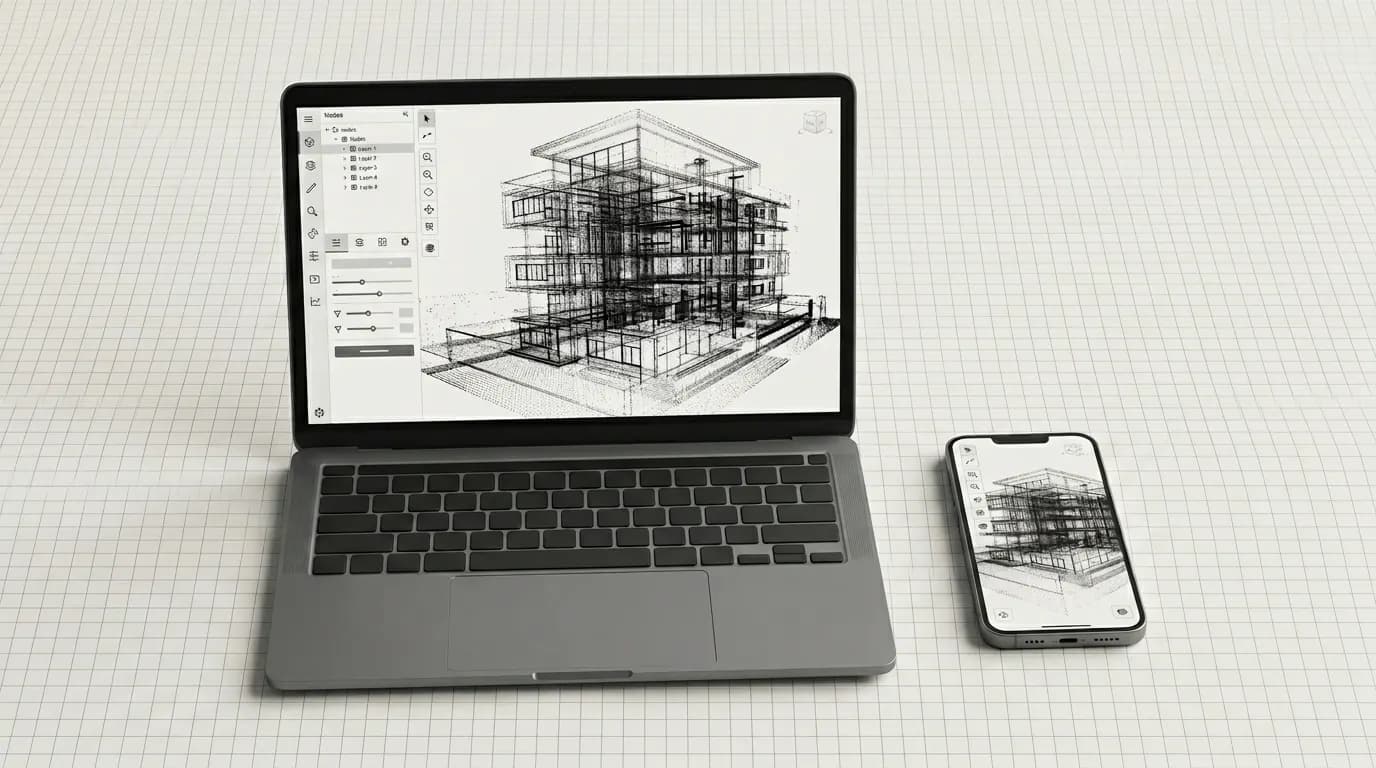
  • Mockup of geodetic deliverables with a DWG plan, coordinate schedule and PDF report

    Project team package

    DWG plan, coordinate schedule, PDF report and CAD/BIM-ready materials are handed off in one structured archive.

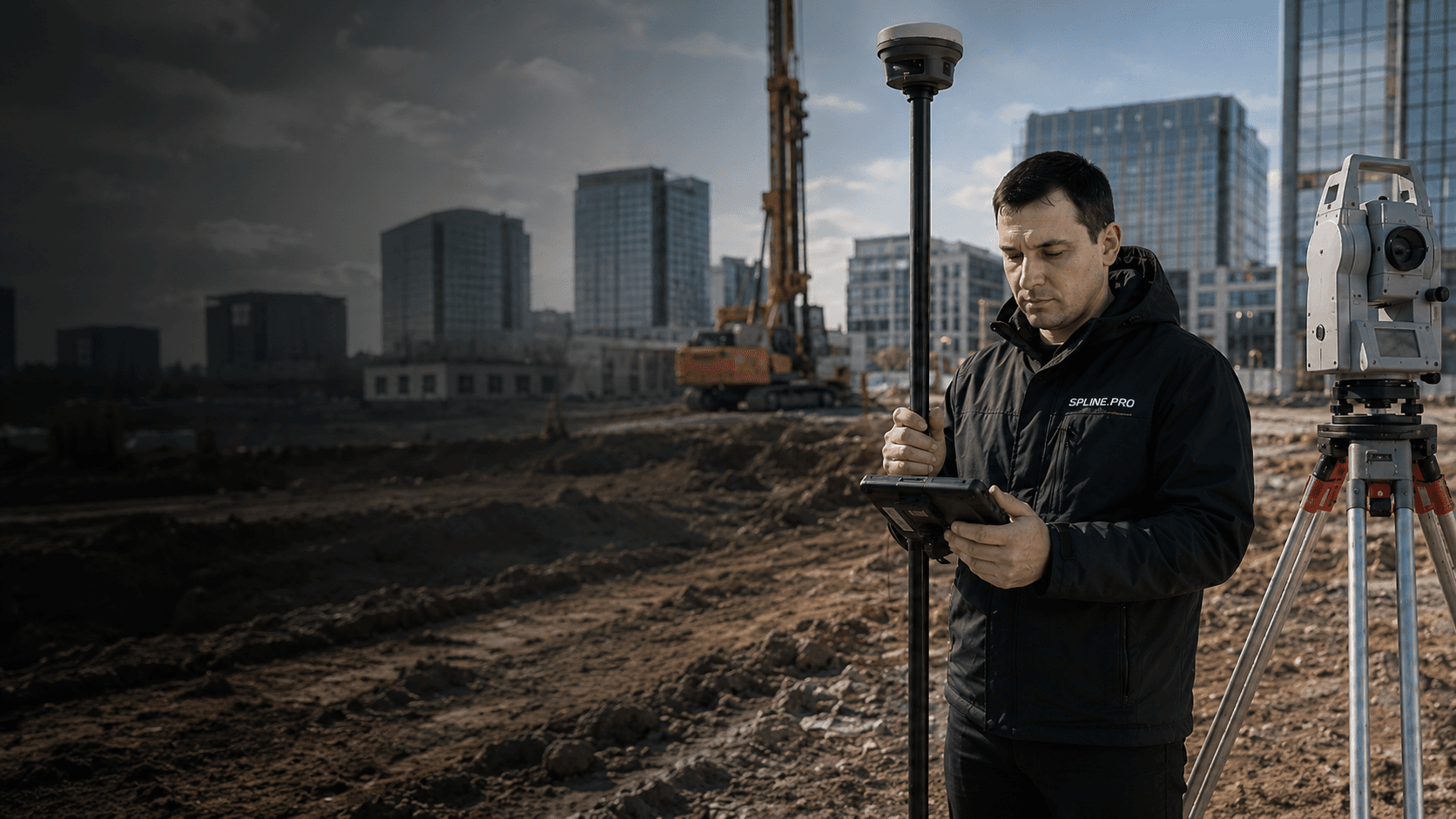
  • Survey engineer checking axes and levels with a total station on a construction site

    Construction site control

    Field measurements help verify axes, levels and actual position before the next work stage.

  • Aerial survey of a territory with geodetic alignment

    Territories and hard-to-reach zones

    For larger sites and roofs, geodesy can be combined with UAV capture, orthophotos and a surface model.

Objects

Where we apply it

  • Land plots and territories
  • Construction sites
  • Industrial facilities
  • Roads, driveways and landscaping
  • Facades, roofs and high elements
  • Parks, courtyards and urban spaces
See all objects
Metrics

Work parameters

up to5mm
accuracy for control tasks
DWG+PDF
base delivery formats
from1day
fieldwork on a typical object
3D+BIM
alignment with models and point clouds
Equipment

Tools we use

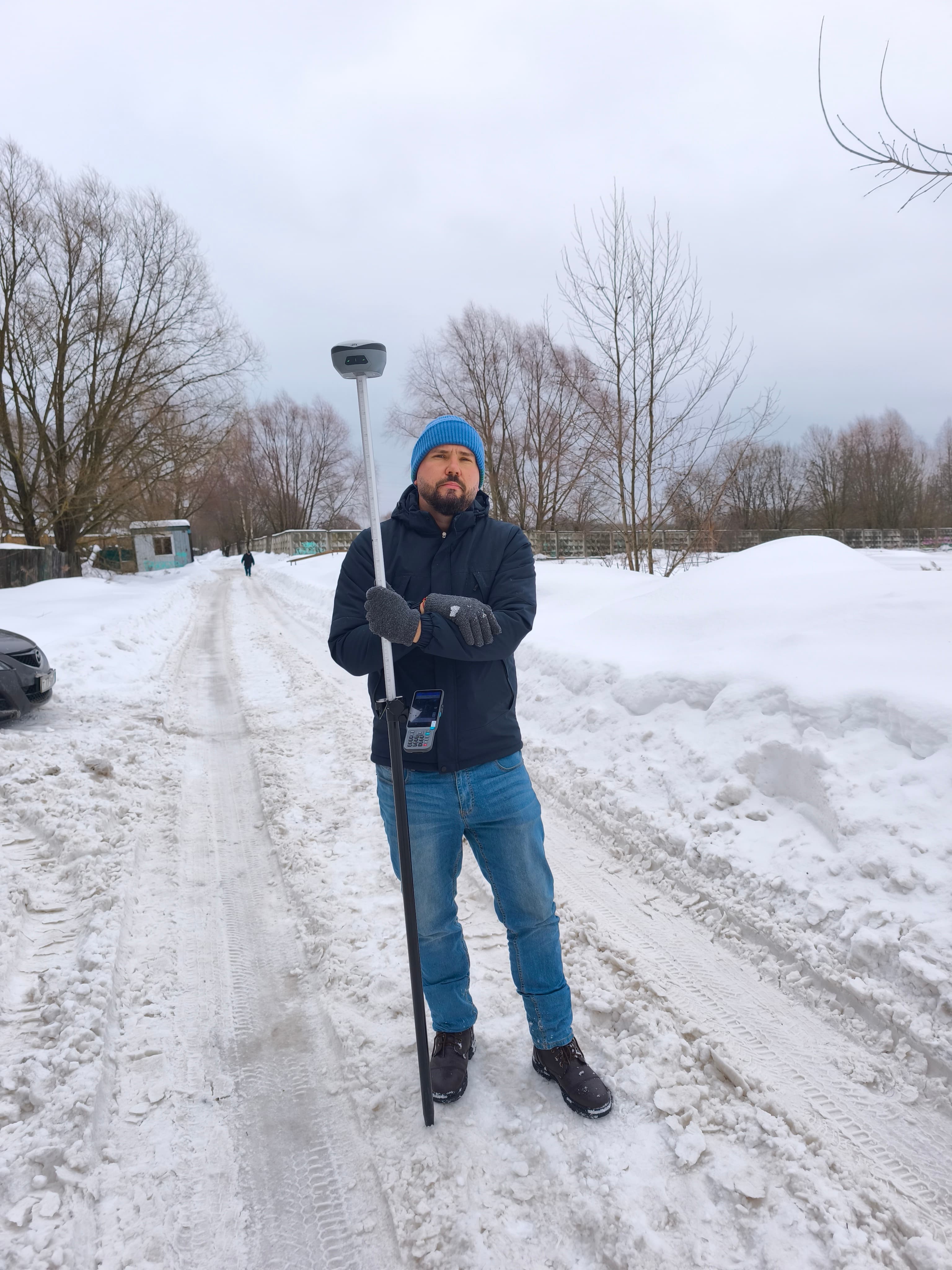
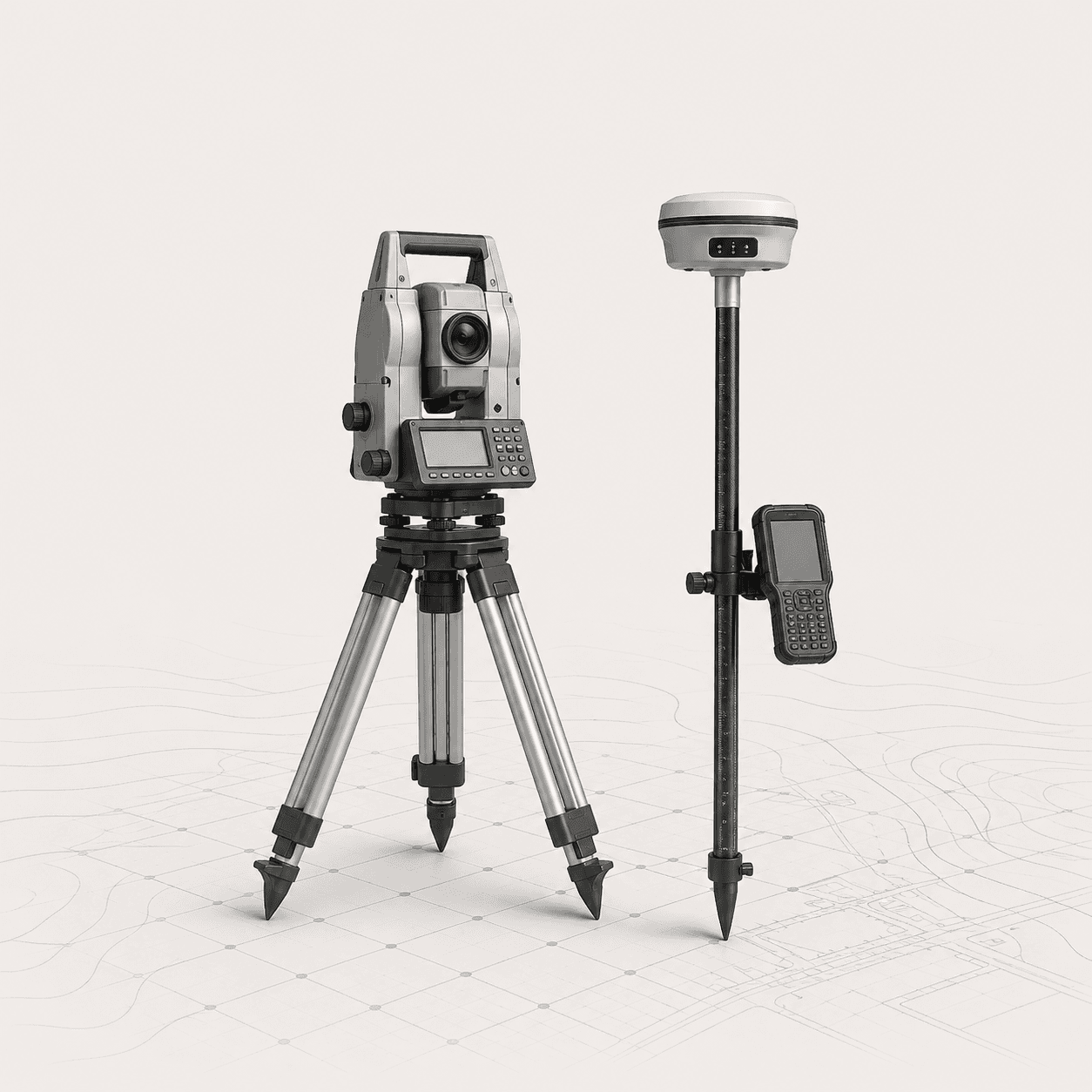
  • GNSS for geodetic work

    GNSS

    Satellite measurements for coordinate basis and object alignment.

  • Total station for geodetic work

    Total station

    Precise angle and distance measurements for topography and stakeout.

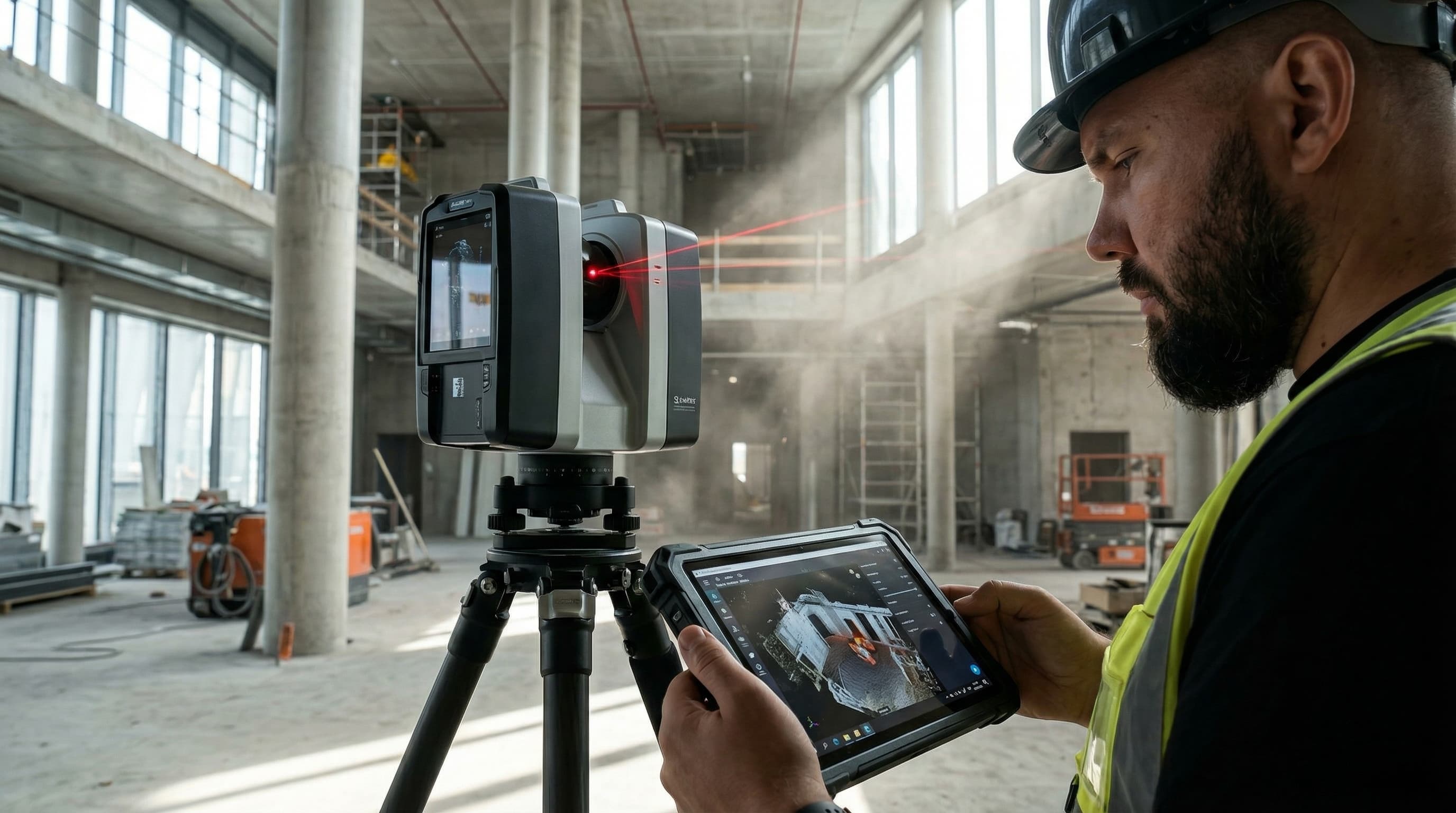
  • Laser scanner for geodetic work

    Laser scanner

    Geodesy plus scanning for complex geometry and 3D data.

  • UAV / drone for geodetic work

    UAV / drone

    Aerial capture for territories, roofs, facades and hard-to-reach zones.

Process

How we work

  1. 01

    Request and task

    We collect address, site boundaries, accuracy requirements and target formats.

  2. 02

    Scope and timeline

    We fix scope, access, coordinate system and schedule.

  3. 03

    Field visit

    We arrive with GNSS, total station, scanner or UAV depending on the task.

  4. 05

    Processing and control

    We combine measurements, check accuracy, prepare drawings, schedules and archive.

  5. 06

    Data delivery

    We hand off materials in required formats and answer project team questions.
For quote

Source data we need

The address, site boundary and desired result are enough to start. Existing plans, design files or coordinate systems help us prepare faster.

  • Address or cadastral description of the object
  • Area, site boundary or work zone
  • Task: topography, stakeout, as-built survey or control
  • Required coordinate and elevation system, if defined
  • Existing plans, project files, masterplan, BIM or point clouds
  • Site access and work mode restrictions
  • Desired delivery date
Comparison

Geodesy, scanning, measured surveys and UAV are not the same thing

For a mixed task, selecting the right method combination upfront is cheaper, faster and lowers the risk of repeat visits.

Select the work scope
MethodBest fitWhat it providesWhen one method is not enough
GeodesyCoordinates, levels, stakeout, as-built surveys and topographic plans.A verifiable basis for construction, site engineers, designers and contractors.Does not replace a dense point cloud inside a complex building or facade.
Laser scanningComplex geometry, facades, interiors, equipment and reconstruction.Dense point cloud, 3D basis, drawings and BIM from actual conditions.Without geodesy it may not solve the shared coordinate system for the site.
Measured surveysRooms, simple plans, renovation, design and local measurements.Plans, dimensions, elevations and DWG/PDF documentation set.Not suitable for stakeout, levels, coordinate basis or large territories.
UAV / photogrammetryOrthophotos, territories, roofs, facades and visual capture.Orthophoto, 3D/mesh, surface model and visual materials.Needs geodetic alignment and control points for reliable metric output.
FAQ

Geodesy questions

  • What geodetic work do you do?

    Topographic surveys, coordinate alignment, stakeout, as-built surveys, level control and design-ready data preparation.
  • What accuracy is possible?

    Accuracy depends on the task, equipment, conditions and coordinate system. For control tasks we can work with millimeter tolerances; for topographic plans we select accuracy for the project.
  • Can we get a topographic plan in DWG?

    Yes. We usually deliver DWG and PDF, and can add DXF, coordinate schedules, photo reports and source data archives.
  • Do you perform as-built surveys on construction sites?

    Yes, we capture actual structure positions, levels, axes and deviations, then prepare materials for contractors, supervision and designers.
  • Can geodesy be combined with laser scanning?

    Yes. A geodetic basis helps align point clouds, BIM models, photogrammetry and drawings in a shared coordinate system.
  • What formats do you deliver?

    DWG, DXF, PDF, CSV, TXT, plus data for Revit, Archicad, IFC and SketchUp when geodesy is part of a complex 3D task.
  • How long does it take?

    A typical field visit starts from one business day. Processing time depends on area, site density, format requirements and approvals.
  • What do you need for a quote?

    Address, approximate work boundaries, task, required formats and timeline. If you have existing plans, project files or a coordinate system, send them with the request.

Need geodesy for a project or construction site?

Send the address, work boundaries and task. We will suggest the scope, timeline and delivery format.

Request a quote

No full technical brief is required: send the address, work boundaries and desired result. If you have an old plan, project file, photos or coordinate system, attach them, but you can submit the request without files.

Service: Geodesy

[EN] How would you like us to contact you?

[EN] Files

Attach a brief, plan, DWG/PDF or link. No files yet? Send the request without them.

We usually reply and clarify source data within one business day.

CallTelegramQuote